Emma Hall
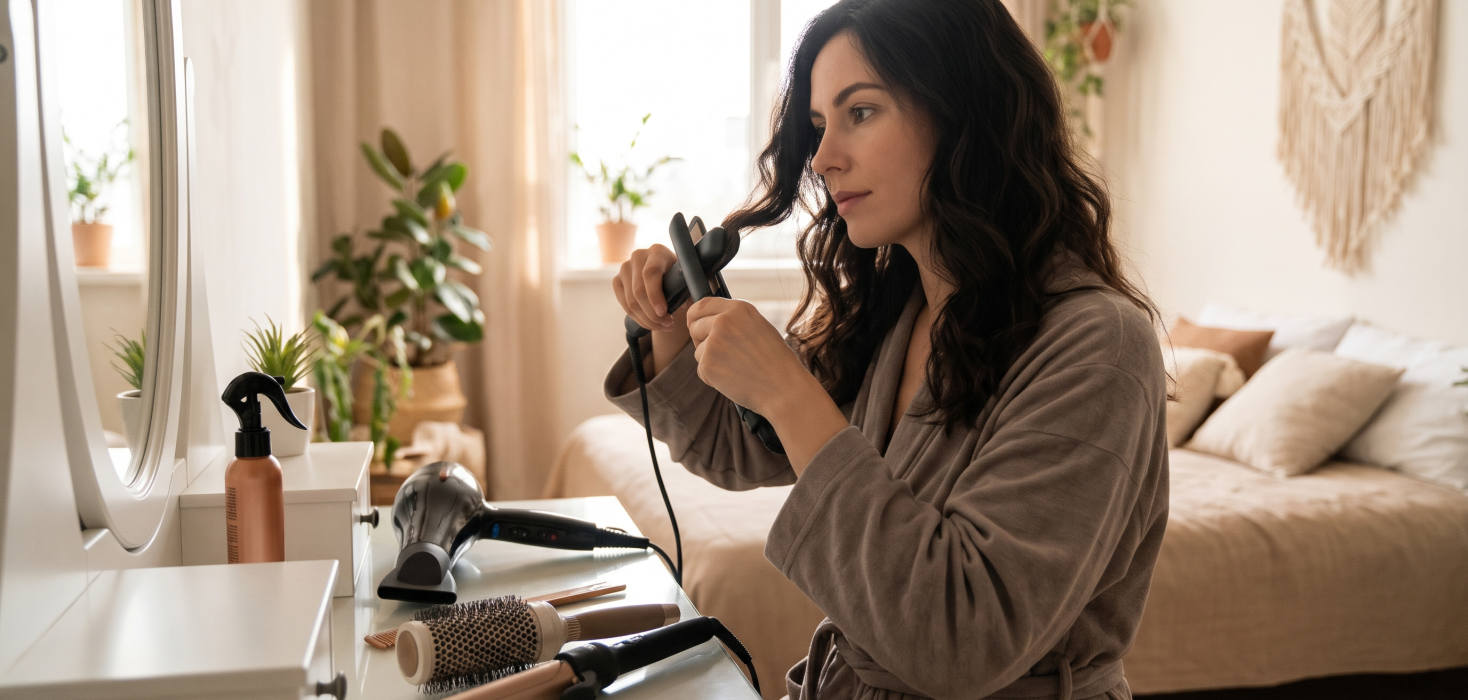
You love how your hair looks after a blow dry or a pass of the straighteners, but you’ve heard that heat ruins hair, and you’re not sure whether you’re doing too much. Search for an answer and you’ll find every rule going, from “only twice a week” to “never at all”. None of them seem to fit your hair or your routine.
The truth is that there’s no single number that’s right for everyone. How much heat your hair can handle depends on the temperature you use, how long the heat touches your hair, the condition it’s already in and whether you protect it. Once you understand those factors, you can keep styling the way you like with less risk of damage.
What Heat Actually Does to Your Hair
Hair is made mostly of a protein called keratin, protected by an outer layer called the cuticle. Heat temporarily changes the bonds in the hair so it can be reshaped, which is how straighteners and curlers work. Used often or at high temperatures, though, heat can dry hair out, lift and roughen the cuticle, and weaken the strand over time. Hair that’s been through that repeatedly tends to look dull, feel rough and snap more easily.
Why Some Hair Needs More Care
Not all hair reacts to heat in the same way. Fine hair has thinner strands and can be damaged at lower temperatures than thick or coarse hair. Hair that’s already dry, bleached, coloured or chemically straightened is more porous and fragile, so it loses moisture faster under heat. If your hair falls into any of these groups, the same routine that works for a friend with thick, untreated hair may be too much for yours.
Signs You’re Using Too Much Heat
Your hair will usually tell you when it’s had enough. Look out for:
- A dry, straw-like feel that conditioner doesn’t fix
- Dullness and loss of shine
- More frizz and flyaways than usual
- Split ends and snapped strands
- Hair that won’t hold a style the way it used to
If you notice these, cut back on heat and temperature for a while and focus on conditioning.
Hair Dryers, Straighteners and Curling Irons
Different tools put different levels of stress on your hair.
Hair dryers use hot air rather than direct contact, so they’re generally the gentlest of the three. Using a medium setting, keeping the nozzle moving and holding it a few centimetres from your hair all reduce the impact. Our guide to hair dryer vs air drying weighs up when each is the better option.
Straighteners press hot plates directly against the hair, often at high temperatures. That combination of heat and pressure makes them one of the more demanding tools, especially when used on the same sections day after day.
Curling irons and wands also use direct contact, and holding a section in place for too long is a common cause of heat damage.
For all three, contact time matters as much as temperature. Work in small sections so a single pass is enough, rather than going over the same piece again and again.
Always Start With Dry Hair
Wet hair is weaker and more easily damaged, so never use straighteners or curling tongs on wet or damp hair. If you hear sizzling, your hair isn’t dry enough. Before blow drying, squeeze out excess water with a microfibre towel and let your hair air dry for a while, so it spends less time under the dryer.
Choose the Right Temperature
Hotter isn’t always better. Many tools let you adjust the heat, so start at the lowest setting that styles your hair and only turn it up if you need to. Fine, damaged or coloured hair usually responds well to lower settings, while thick or coarse hair may need a little more heat to hold a style. If your hair steams excessively or smells burnt, the temperature is too high. The quick guide below gives a starting point for each hair type.
Do You Need Heat Protection Every Time?
Yes. Whenever you use a hair dryer, straighteners or curling tongs, a heat protectant helps create a barrier between your hair and the heat. Apply it evenly through your mid-lengths and ends before you style, letting it absorb or dry first if the instructions say to. It won’t make your hair heatproof, but it can reduce the moisture loss and roughness that come with regular styling.
Give Your Hair Time to Recover
After an intensive styling session, such as a full blow dry and curl for an event, give your hair a break by air drying or choosing a heat-free style for the next few days. A weekly deep conditioning or bond-repair mask can help it feel softer and stronger in between.
You can also make each style last longer, so you need heat less often. Dry shampoo at the roots, sleeping on a silk or satin pillowcase and loosely tying hair up overnight can help a blow dry or curls last two or three days. If your hair is already showing signs of damage, our article on why hair keeps breaking covers the habits worth changing.
How to Style Hair Without Heat
Heat-free styling has come a long way, and it’s an easy way to cut down without giving up the look you want:
- Heatless curls: Wrap damp hair around a soft curling rod, rag strips or a dressing gown belt overnight.
- Braids and twists: Plait damp hair before bed for waves in the morning.
- Air drying with product: Apply a smoothing cream or leave-in conditioner and let your hair dry naturally.
- Velcro or foam rollers: Set rollers on dry or slightly damp hair for volume.
- Buns and up-dos: Twist hair into a loose bun while it dries for soft movement.
Quick Guide: Adapting Your Routine by Hair Type
| Hair Type or Condition | Heat Setting | Extra Tips |
|---|---|---|
| Fine or fragile hair | Low | Use light heat protection, one pass per section |
| Coloured or bleached hair | Low | Mix in heat-free styles and use a weekly mask |
| Thick or coarse hair | Low to medium | Work in small sections so each pass works first time |
| Curly or textured hair | Low to medium | Use a diffuser on low heat, straighten only occasionally |
| Dry or damaged hair | Lowest setting that works | Cut back on heat while hair recovers |
Frequently Asked Questions
Is It Bad to Heat Style Your Hair Every Day?
Daily styling isn’t automatically damaging, but daily straightening at maximum heat without protection is where problems tend to build up. If you style every day, keep the temperature low, use protection, and try to stretch your style or swap in heat-free days where you can.
Do You Need Heat Protection When Blow Drying?
Yes. A hair dryer is gentler than straighteners, but it still exposes your hair to heat, so a protectant is worth using every time.
Why Isn’t There a Set Number of Times a Week?
Because frequency is only one part of the picture. Styling twice a week at maximum heat on bleached hair can cause more damage than styling more often at a low temperature on healthy hair with protection.
Style With Confidence, Not Guesswork
You don’t need to give up your straighteners or stick to a strict schedule to keep your hair healthy. Keeping temperatures moderate, limiting contact time, protecting your hair every time and taking breaks when it needs them will go much further than any fixed rule. Pay attention to how your hair looks and feels, and adjust from there. For more hair care tips, visit Emma Hall Hair.