

 Emma Hall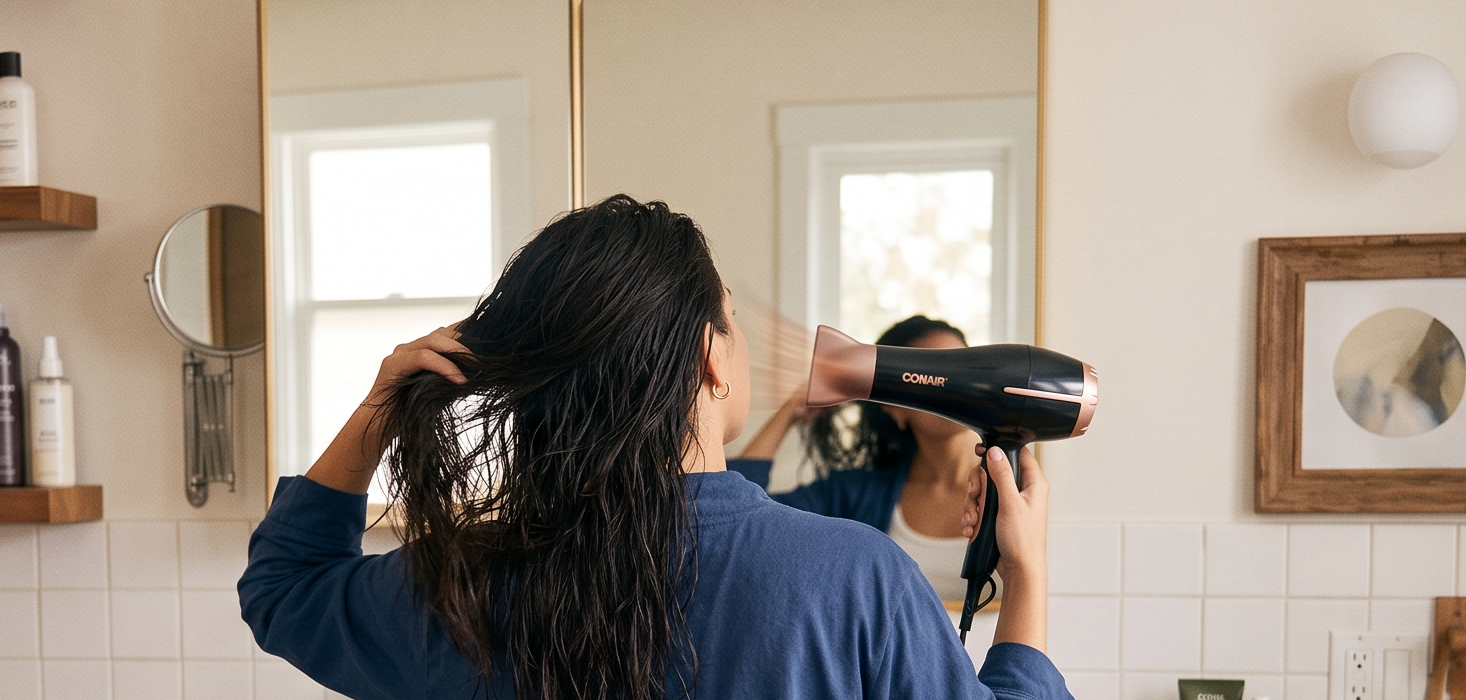
You step out of the shower, towel in hand, and face the same question you ask almost every time. Do you reach for the hair dryer, or let your hair dry naturally and hope for the best? Both routes come with their own trade-offs, and neither one is completely risk free. Whether you are wondering if air drying your hair is good for you, or if blow drying your hair is good for you, the honest answer is that it depends on your hair type, how much time you have, and how carefully each method is done. Here is what is actually happening to your hair either way, and how to make both options work better for you.
Why Your Hair Is Most Fragile When Wet
Regardless of how you dry it, your hair is at its most vulnerable the moment you step out of the shower. Water temporarily weakens the hydrogen bonds that hold each strand’s structure together, causing the hair shaft to swell and the outer cuticle to lift slightly. This makes wet hair more elastic, which sounds harmless but actually means it stretches further before it snaps. Brushing too soon, twisting hair into a towel turban, or tying it up tightly can all cause more damage than people realise. This is really the heart of the debate. It is less about air drying versus blow drying, and more about how gently your hair is treated while it is still wet.
Is Air Drying Your Hair Good For You?
Letting your hair dry naturally avoids direct heat altogether, which helps preserve your natural texture and stops the cuticle from being exposed to high temperatures. For many people, particularly those with curly or wavy hair, this is a genuine advantage.
The downside is time. The longer hair stays wet, the longer it spends in that fragile, swollen state, and a constantly damp scalp creates a warm, humid environment. Dermatologists have warned that this can encourage an overgrowth of the yeast that naturally lives on the scalp, sometimes leading to irritation or flaking. Air drying is not automatically the gentler choice. It works best when the dampness is managed properly rather than left to sit for hours.
Is Blow Drying Your Hair Good For You?
A hair dryer shortens the time your hair spends wet and fragile, and using the nozzle attachment on a low setting helps smooth the cuticle down, which can leave hair looking glossier. Used carelessly, though, a hair dryer can do real damage. One study found that standard blow drying can raise the surface temperature of hair to around 80°C, which places enough stress on the cuticle to cause cracking and lifting over time. This does not mean blow drying is inherently harmful. It means high heat, close contact, and going over the same section repeatedly are the real problems, not the tool itself.
How To Make Blow Drying Gentler
A few small habits make a noticeable difference. Use a low or medium heat setting rather than the highest one, keep the dryer moving instead of holding it in one spot, and hold it around 15cm away from your hair. Applying a heat protectant beforehand adds another layer of defence, and giving your hair the occasional break from heat styling, as recommended in our guide to keeping hair healthy in winter, gives it time to recover between blow dries.
How To Make Air Drying More Hair-Friendly
Air drying can be kinder to your hair with a few adjustments. Squeeze out excess water with a microfibre towel or an old cotton t-shirt rather than rubbing vigorously, which causes friction and frizz. Apply a leave-in conditioner or a light serum while hair is still damp to help protect the cuticle as it dries naturally. Avoid tying hair up tightly or going to bed with it still wet, since prolonged dampness against a pillow adds unnecessary strain on both your hair and your scalp.
Which Method Is Right For You?
There is no single answer that suits everyone. Fine or heat-sensitive hair may do better with mostly air drying and occasional low-heat styling, while thicker or curlier hair might actually fare better with a quick, controlled blow dry that limits how long it stays wet and swollen. What matters more than the method itself is how it is done. Keep the heat moderate, handle wet hair gently, and avoid leaving it damp for hours on end. If you are still working out what suits your hair best, Emma Hall Hair shares practical, easy to follow advice on everyday hair care to help you build a routine that genuinely works for your hair type.
Interactive quiz to find whether air drying, blow drying, or a hybrid approach suits your hair best
Not sure whether to reach for the dryer or let your hair dry naturally? Answer these four quick questions to find out which approach suits your hair best.
What best describes your hair?
Choose an option first.
How much time do you usually have after washing?
Choose an option first.
How heat sensitive does your hair feel lately?
Choose an option first.
What matters most to you?
Choose an option first.

One thought on “Hair Dryer vs Air Drying: Which Is Better for Your Hair?”