Emma Hall
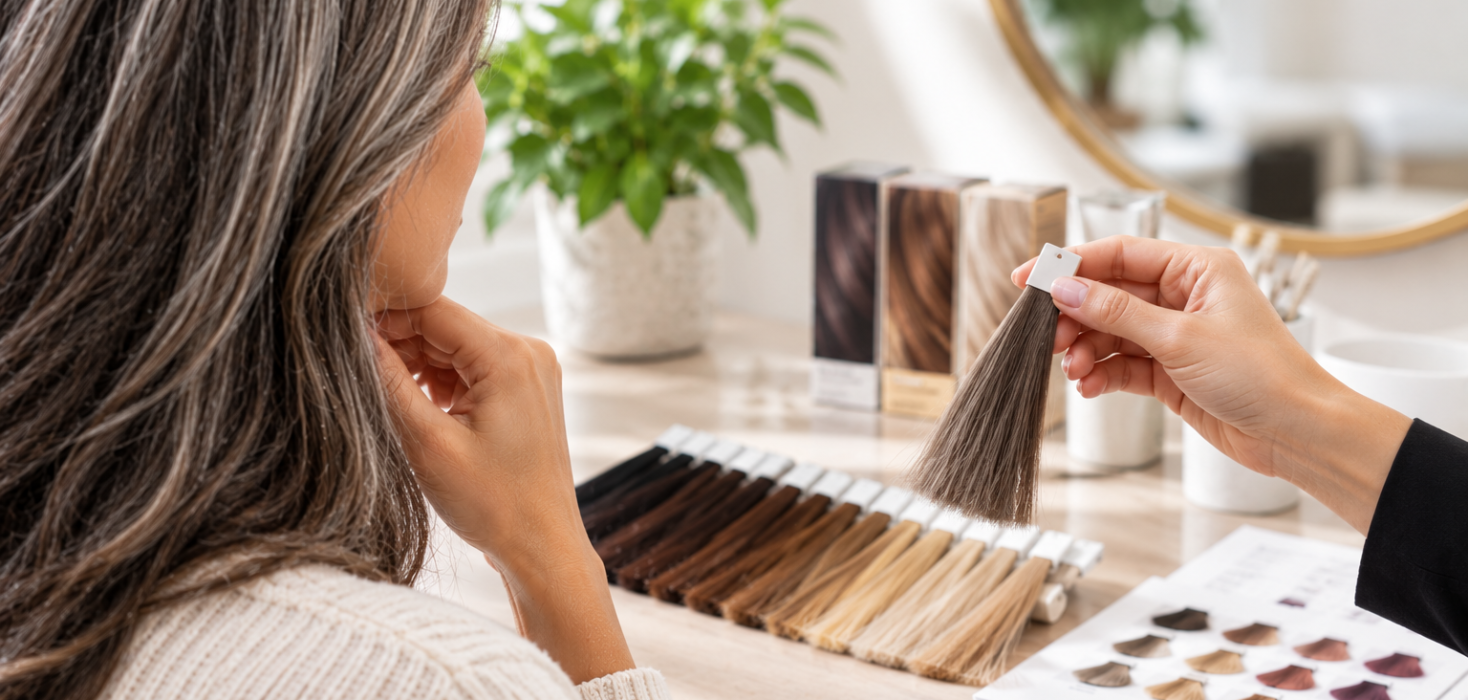
You spot a few more greys at your parting every week, and the box dye aisle doesn’t make the decision any easier. Dozens of shades, three or four types of colour and promises of “100% coverage” all compete for your attention. Pick wrong and you could end up with greys still showing through, roots that appear within days or a shade that looks flat and too dark.
The good news is that you can dye grey hair successfully at home. It comes down to two choices: the type of dye and the shade.
Why Grey Hair Can Be Harder to Colour
Grey hair has lost most of its natural pigment, and it often feels coarser or more resistant than the rest of your hair. That can make it slower to take colour, which is why some dyes cover it well while others only soften it. How much grey you have, and where it sits, will shape which option works best for you.
The Main Types of Hair Dye
Permanent colour works inside the hair shaft and stays until the hair grows out or is cut. It’s usually the first choice when long-lasting grey coverage is the priority, especially if you have a lot of grey or it’s concentrated in one area. The trade-off is commitment: you’ll see a regrowth line as your hair grows, so expect to touch up your roots regularly.
Semi-permanent colour coats the hair and gradually washes out, usually over several weeks. It tends to blend greys rather than cover them completely, giving a softer result with less obvious regrowth. It’s a good option if you only have a few greys or want to try a colour before committing.
Temporary options, such as root sprays, powders and colour sticks, sit on the surface and wash out with your next shampoo. They won’t change your colour, but they’re handy for hiding roots between colouring sessions or before an event.
| Dye Type | How Long It Lasts | Grey Coverage | Best For |
|---|---|---|---|
| Permanent | Until it grows out | Full | Lots of grey, long-lasting results |
| Semi-permanent | Several weeks | Blends and softens | A few greys, less commitment |
| Temporary | Until your next wash | Disguises roots | Touch-ups between colours |
How Much Grey Do You Have?
Take a look in good natural light. If greys are scattered and you can still see plenty of your natural colour, a semi-permanent dye may give you all the blending you need. If grey makes up most of your hair, or forms a solid patch at your temples or parting, permanent colour will usually give a more even result. Many people also find their greys show most around the hairline, so check there before you decide.

Choosing the Right Shade
It’s tempting to go darker to hide every grey, but very dark colour can look harsh against your skin tone and makes regrowth more noticeable. Most colourists suggest staying within one or two shades of your natural colour, or going slightly lighter. A softer shade lets any regrowth blend in rather than stand out.
Think about tone as well. Warm shades, such as golden or copper browns, can add brightness to your complexion, while cool or ash tones can calm down any redness. If you’re unsure, choose the shade on the box that sits closest to your natural colour, and look for a range made for grey coverage.
Follow the Instructions and Do an Allergy Test
Always read the instructions before you start, even if you’ve used the product before, as formulas can change. Most hair dyes ask you to carry out a skin allergy test 48 hours before colouring. Many permanent and some semi-permanent dyes contain a chemical called PPD, which can cause reactions, and the NHS also suggests testing the dye on a strand of hair first. A strand test shows you how the shade looks on your greys before you colour your whole head.
Leave the dye on for the full time stated. Grey hair often needs it, and rinsing early is one of the most common reasons for patchy coverage.
Caring for Coloured Hair
Colour can leave hair feeling drier, so use a gentle shampoo and conditioner made for coloured hair, and don’t wash it more often than you need to. If your lengths feel rough after colouring, our Hair Serum Guide explains how a serum can help smooth them.
When Professional Advice Is Worth It
Home colour works well for keeping roots in check or staying close to your natural shade. For a big change, such as going much lighter, or for fixing a colour that hasn’t turned out as planned, it’s worth seeing a professional colourist. Colour correction is difficult to get right at home, and a colourist can assess your hair and adjust the formula for your greys.
Covering Greys Without the Guesswork
Once you know how much grey you have and how much commitment you want, the dye aisle becomes much easier to navigate. Choose the type that matches your coverage needs, pick a shade close to your natural colour, and always test first. For more advice on caring for your hair, visit Emma Hall Hair.